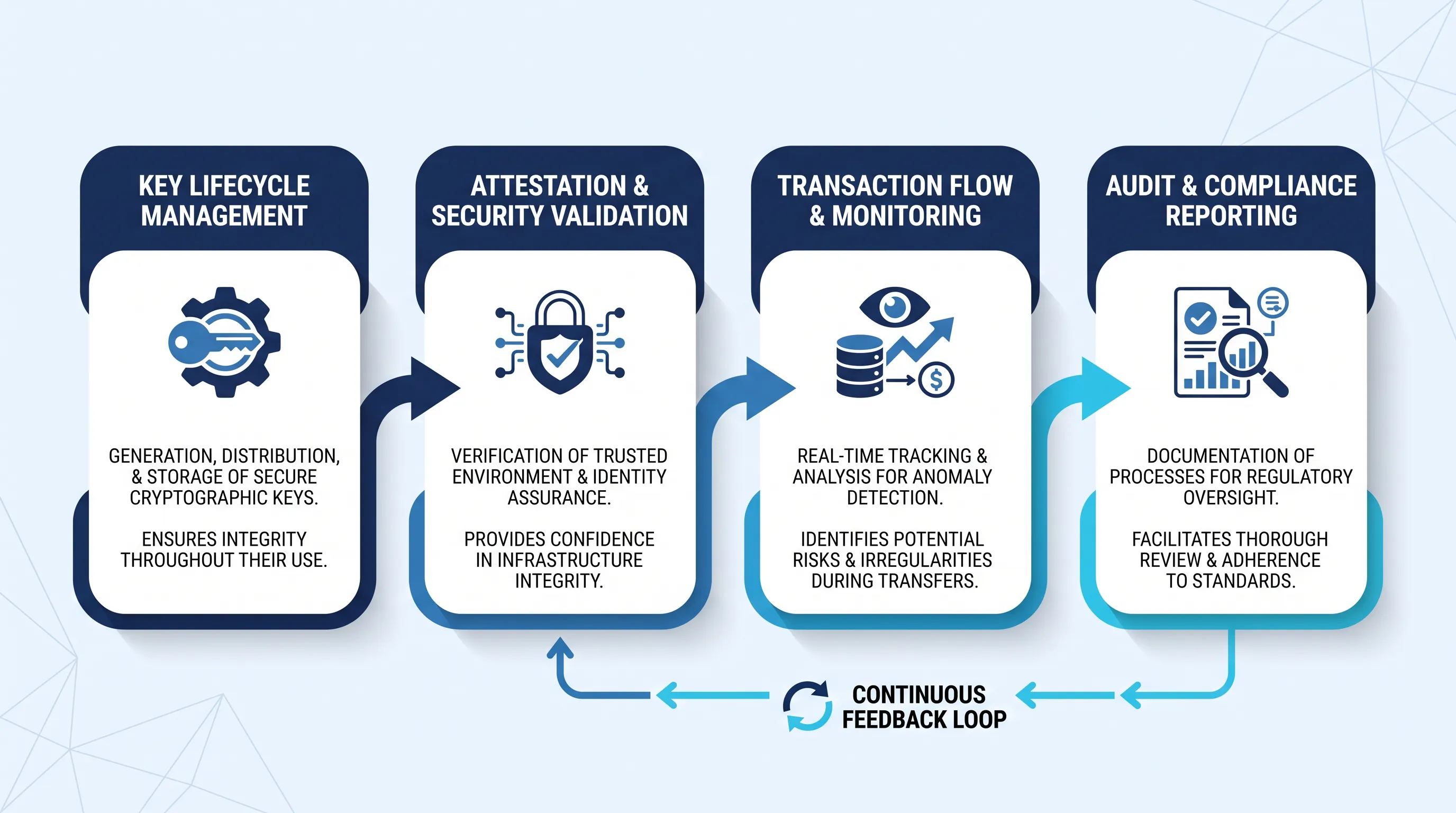
Check supplier evidence
Procurement timelines reward whoever answers fastest, and in mobile acceptance the fastest answer is the vaguest one. Test supplier claims before architecture and delivery commitments are signed. PCI MPoC certification language in a sales deck is a starting point for questions.
MPoC certification claims
Ask for the exact entry on the Council's listings, then open the listing yourself and confirm it matches the build you'll receive. Ask which listing type it is, because each listing type carries different weight in your architecture. Ask for the attestation document and the scope description that sits behind it.
There's a real difference between informal "certified" language and formal validation evidence. A vendor saying it's PCI MPoC certification compliant or built to the standard is describing intent. A listing entry with a current validation status and a matching attestation is a fact you can build on, and the gap between the two has derailed more than one African mobile acceptance launch.
Environment and dependency evidence
Get the supported environment in writing and check it against the handsets your merchants actually own.
The questions worth forcing an answer to:
-
Which device models and chipsets are approved, and which are explicitly excluded?
-
Which Android versions and API levels are covered, and what happens to support when a new release lands?
-
Which back-end services must be present, and are they the vendor's own or a third party's?
-
Which integrations were in scope during assessment, and which were not?
-
What operational controls does the vendor assume you'll run, and where is that assumption documented?
-
What are the stated exclusions, in the vendor's own words?
Exclusions are the most useful page in any evidence pack. They tell you precisely what you've just become responsible for.
Change and monitoring ownership
Mobile acceptance is a live security posture, so the ownership questions that matter are about motion. Who detects a new attack technique against the acceptance application, and how fast does that reach you? Who maintains each component, and who refreshes the evidence afterward?
Push hard on the incident path. If a merchant's device is compromised, name the party that disables it and the party that notifies the schemes. Then ask the same question for a mandatory operating system upgrade and for an integration change on your side, because PCI MPoC certification holds only while the assessed conditions still describe reality.
Turn scope into delivery
Scope documents don't process transactions. Somewhere between the signed vendor contract and the first live merchant, someone has to map the dependencies into a real design and prove the whole thing works under load and under failure.
That's the work EGS does. The team maps component dependencies against your acceptance model and builds the test workflows that exercise the awkward paths. Production support and the preparation of technical evidence for assessment sit in the same engagement, which keeps the documentation attached to the system it describes.
Separate engineering and validation
EGS supports implementation readiness and evidence preparation. It doesn't replace the qualified assessor, and it has no part in the Council's validation decision. Those are deliberately independent roles and conflating them helps nobody.
Bring the assessor in earlier than feels comfortable. The right moment is when the architecture is drafted and before integration work starts, because an assessor's view on scope boundaries at that point costs a meeting, while the same view after delivery costs a rebuild. Keep them informed through major design changes and schedule the formal assessment against a frozen, versioned build.
Confirm rollout readiness
Before you approve the go-live, run one gate and accept a hold if any line fails. The MPoC standard rewards discipline at exactly this point, because every unresolved item here becomes an incident later.
-
The acceptance model is documented and signed off by the business.
-
Every supplier claim is backed by a listing entry and an attestation you've read, with PCI MPoC certification status confirmed as current rather than pending.
-
The responsibility matrix is accepted in writing by each named party and covers the orphan duties.
-
Supported devices and operating system versions match your real merchant base.
-
Testing covers failure and tamper detection.
-
Monitoring has a named owner and a tested escalation path.
-
Change control defines who re-validates what when a component version moves.
-
Unresolved dependencies are listed with an owner and a date, and none of them sit on the critical path.
Anything you can't answer today becomes an assessor's question later, under worse conditions. Write the gaps down and assign them now.
Discuss your rollout
Mobile acceptance across African markets succeeds or fails on delivery detail. Bring your mobile acceptance architecture to EGS to discuss scope and rollout readiness. Tell us the acceptance model you've chosen and the delivery questions you haven't resolved yet. Book a call with our engineering team to turn PCI MPoC scope into a plan you can ship.