How routing logic picks a path
A switch chooses the path by applying configured rules to each message in real time based on the BIN and the cost of each available rail.
Cost rules get the most attention because the money is countable. Least cost routing sends eligible transactions to the cheapest available network, and it works: CMSPI estimates that least-cost debit routing has already saved US merchants over $1 billion annually, with room for up to $3 billion in total as rule changes open more volume to it.
But approval rates and cost pull in different directions, and the second one is bigger. Each network applies its own acceptance criteria, so the cheapest rail is not reliably the one most likely to approve. If you route purely on cost, you'll book a fee saving measured in basis points against an approval loss measured in whole percentage points.
That's the tradeoff worth encoding in your rules. Cost as a tiebreaker, approval probability as the primary signal.
How failover keeps payments alive
Failover keeps payments alive through health checks that spot a dead hop and secondary routes that carry traffic around it.
Health checks watch each connection continuously. When a destination stops answering inside its timeout, the switch marks it down and sends the next message elsewhere, all inside the same customer session. The schemes run their own version at the issuer hop. Stand-in processing lets the network authorize on the issuer's behalf using pre-configured issuer parameters when the issuer can't respond.
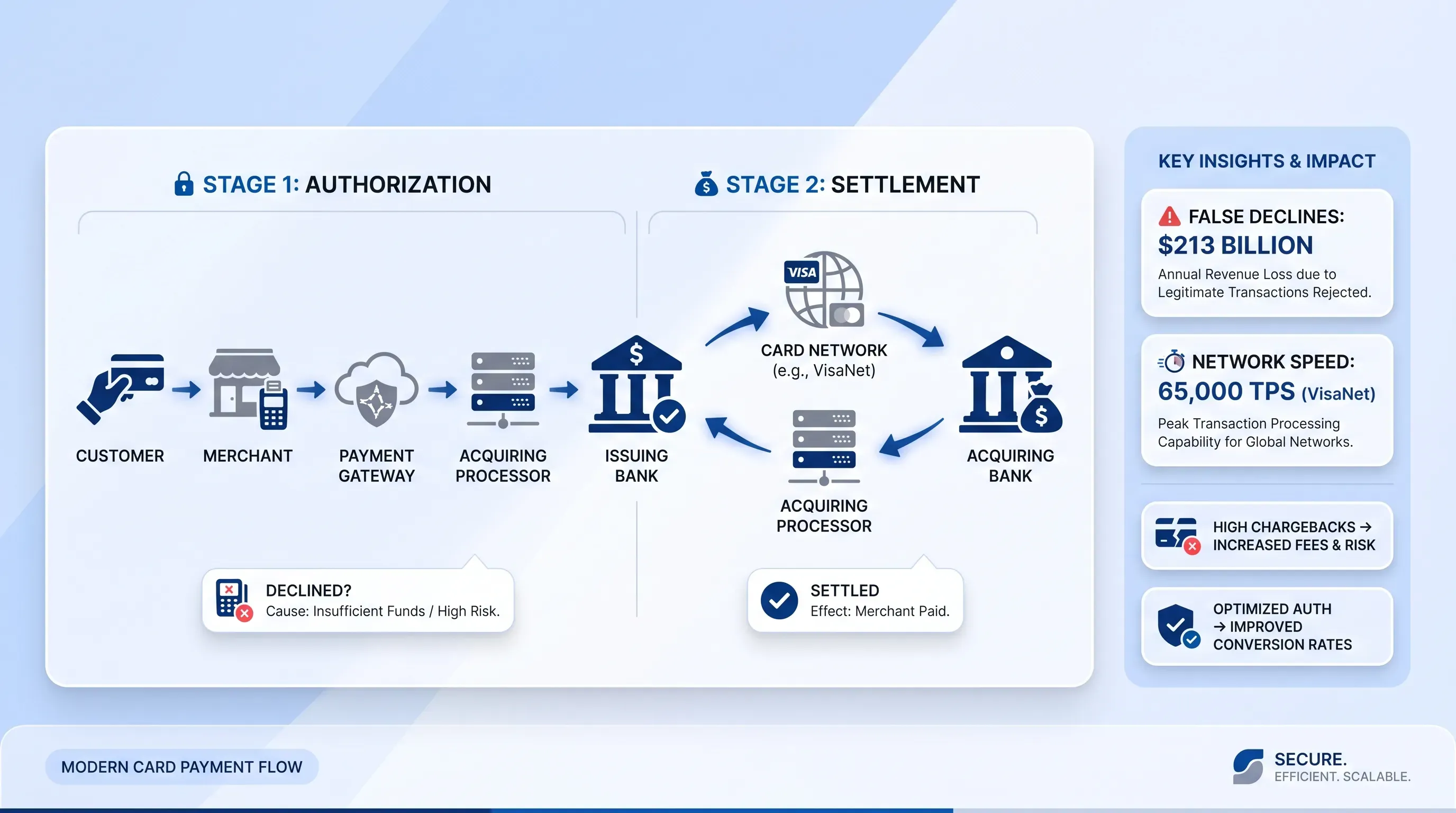
The gain is measurable. Visa's Smarter STIP, which trained a deep-learning model on billions of records and reached 95% accuracy against the decisions issuers would have made themselves, cut declines by as much as 50% in some outage scenarios.
Retries need the same discipline. A soft decline is retryable and a hard decline is not, so a switch that retries everything turns one issuer hiccup into a fraud signal against your own BIN range.
Why latency and uptime matter
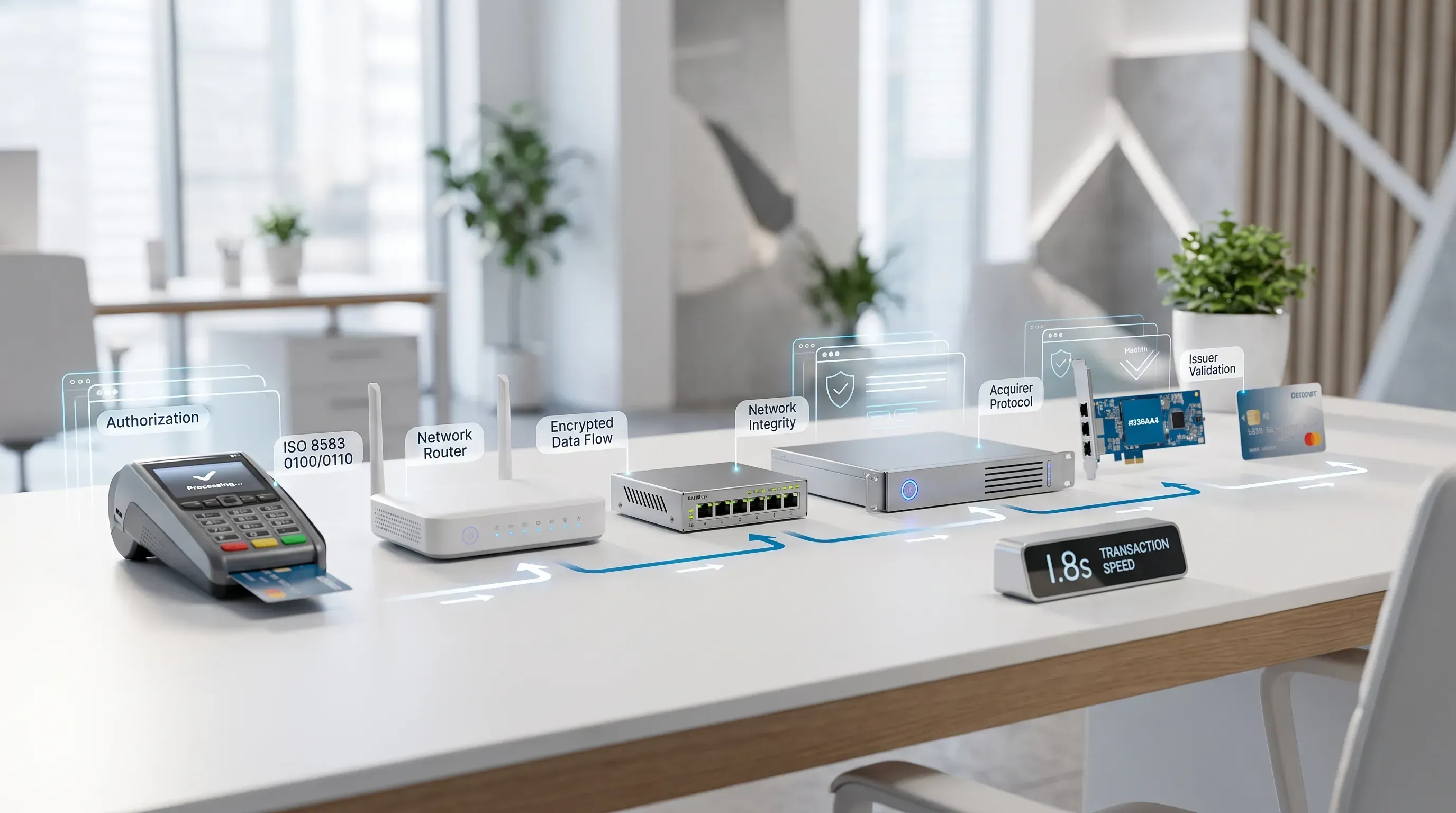
Card-present authorization is engineered for 400 to 800 milliseconds end to end, and every hop you add spends part of that budget. Nothing in the chain gets to be slow.
The math is unforgiving because the budget is shared. A reasonable target for a switch's own processing time is under 50 milliseconds at the 99th percentile, which leaves room for network transit and the issuer's response inside the window a cardholder tolerates. The issuer's internal slice is frequently held under 100ms for the same reason. Owning more of the path helps: Adyen's own acquiring infrastructure removes an intermediate hop worth 40 to 120 milliseconds compared with conventional processor-acquirer setups.
So the delay changes outcomes, because a timeout at any hop becomes a decline, and a decline becomes an abandoned cart. Uptime targets of 99.999% exist for switches precisely because downtime there fails transactions across an entire network at once.
Build resilient routing with EGS
If you've mapped your chain and found hops you don't control or can't measure, the next step is deciding what to build and what to buy. Energize Global Services is a multinational development centre founded in 2007, with roughly 500 people across delivery centres in Europe and Africa that build payment infrastructure and core banking platforms for financial institutions.
The work covers the parts of the path this article walked through: switch and authorization logic inside a millisecond budget and custom development where an off-the-shelf platform won't hold your routing rules. EGS runs ISO 27001 and SOC 2 certified engineering, and now supports ISO 20022 messaging alongside ISO 8583.
Book a call with the EGS engineering team to talk through your routing and where your current latency budget is going.