What digital card issuance means
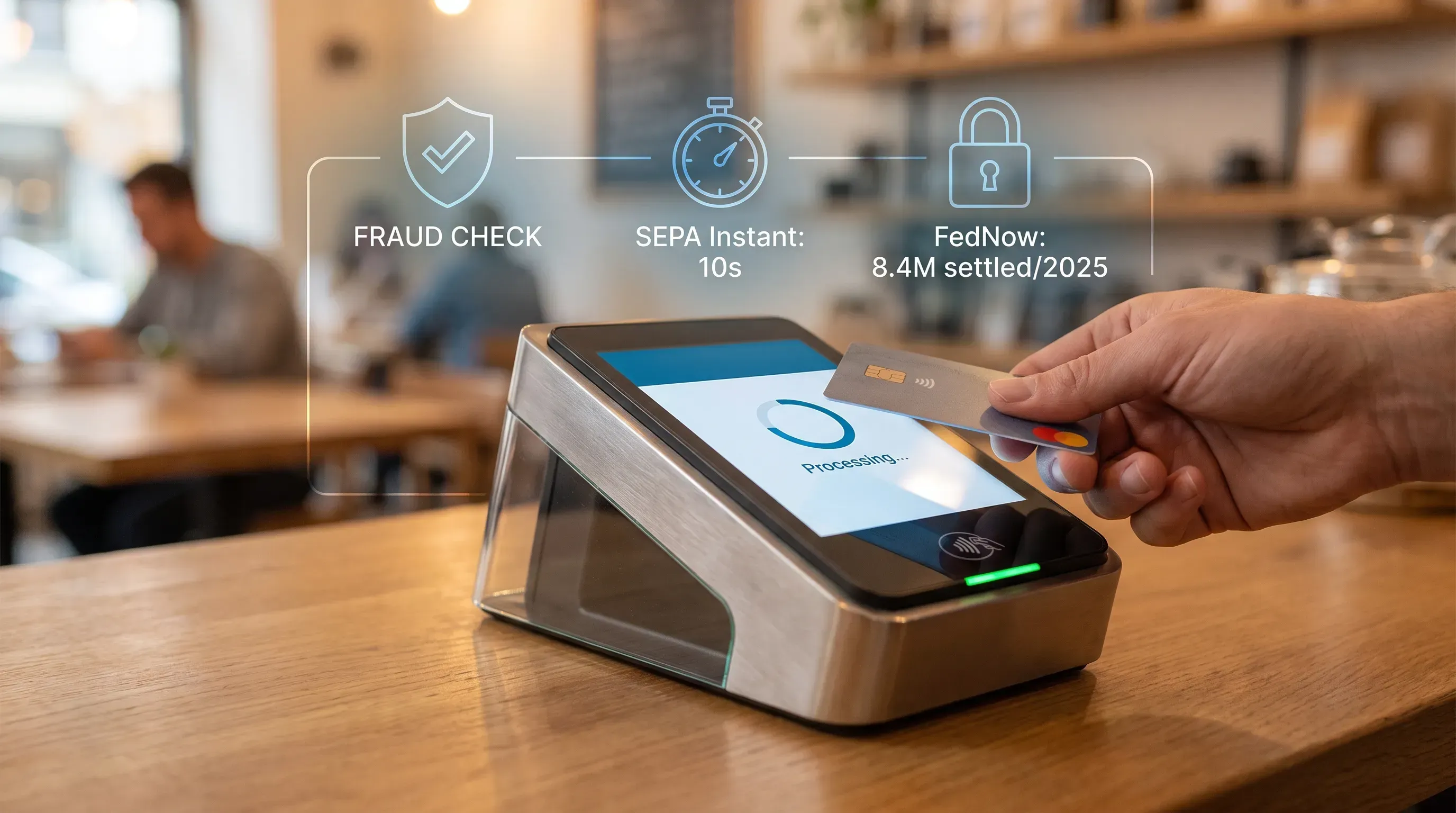
The core keyword here is simple to grasp once you watch it happen. Digital card issuance is the process of creating a payment card credential and delivering it straight to a device or app, so it can be used the moment it exists. There is no printing or postal wait. A debit card can be approved in an app and tapped at a coffee shop minutes later.
For decades, a card meant plastic. After you applied, a bank embossed a number onto a piece of polycarbonate that traveled through the mail. That model is fading fast as wallets take over. Juniper Research expects the number of digital wallet users worldwide to climb from 4.3 billion in 2024 to 5.8 billion by 2029.
What separates digital card issuance from traditional delivery is timing and form. A traditional card is a physical object you wait for. A digital credential is data that lives on your phone, protected by a token instead of the raw card number. Because digital card issuance provisions the credential electronically, the gap between "approved" and "usable" shrinks to seconds, and that shift is what makes instant payments practical.
How wallet provisioning works
Provisioning is the chain of events in digital card issuance that moves a card from issuer approval into a working credential inside a wallet like Apple Pay or Google Pay. It connects the issuer with the card network, and the wallet platform carries its own defined role. When the steps line up, the cardholder sees a card on their screen and can pay with it right away.
The flow rests on two pieces working together. One is the card network, which generates and manages the secure token. The other is the wallet platform, which stores that token on the device and presents the card to the user. Sitting underneath both is tokenization, the security layer that keeps the real card number out of the wallet entirely.
Here is the provisioning flow in plain order:
-
The issuer approves the cardholder and creates the card credential on its systems.
-
The card details are sent through the card network's token service, which checks with the issuer and generates a device-specific token.
-
The token is delivered to the wallet, and the card becomes ready for tap-to-pay.
The sections below break down the two parts that carry the most weight: the tokenization that protects the data, and the practical steps issuers take to get a card into a wallet.
Tokenization and security
Tokenization replaces the real card number, known as the Primary Account Number (PAN), with a randomized stand-in called a token. The token moves through the payment system the same way a card number would, but it carries no value to a thief. The actual PAN stays locked in a secure vault that only the issuing bank can reach, as the US Payments Forum primer describes.
This is why a provisioned card is safer than handing over a plastic one. A physical card exposes the full number on its face, while a token is tied to one specific device and cannot be reused elsewhere. The Nilson Report cited by IntelliPay says tokenization has contributed to a 67% reduction in digital payment fraud since widespread rollout began in 2020.
The device link is what makes a lost phone less frightening than a lost wallet. Because the token belongs to that single device, the issuer can switch it off without canceling the card itself. If the phone goes missing, the token is deactivated and the card stays active. The cardholder doesn't need a new plastic replacement, which the US Payments Forum notes is one of the practical advantages of the model.
Mobile wallet integration steps
Mobile wallet integration starts with identity. Before any card lands in a wallet, the issuer has to confirm the person adding it is the real cardholder. The provisioning process runs a risk check that sorts each session into color-coded paths, as the US Payments Forum leading practices paper explains. A green path goes through cleanly. A yellow path asks for a second factor like a one-time code by SMS or a check inside the issuer app.
There are two main ways a card reaches the wallet, and they differ in who does the work:
-
Push provisioning: the cardholder taps an "Add to Apple Wallet" or "Add to Google Wallet" button inside the issuer's own app. The app and the issuer's backend handle the encrypted card data, so the user never types a number. The Very Good Security push provisioning guide walks through how the issuer app works with Apple's PassKit and Google's Push Provisioning API to complete this.
-
Manual entry: the user opens the wallet app directly and types or scans the card details. The wallet then contacts the issuer to verify before activating the token.
Both routes finish at the same destination. After verification clears and the token is created, the wallet stores it and the card is live for contactless payments. Push provisioning feels smoother for the cardholder because the issuer app already knows who they are, which trims the friction that manual entry can add.
Apple Pay and Google Pay differences

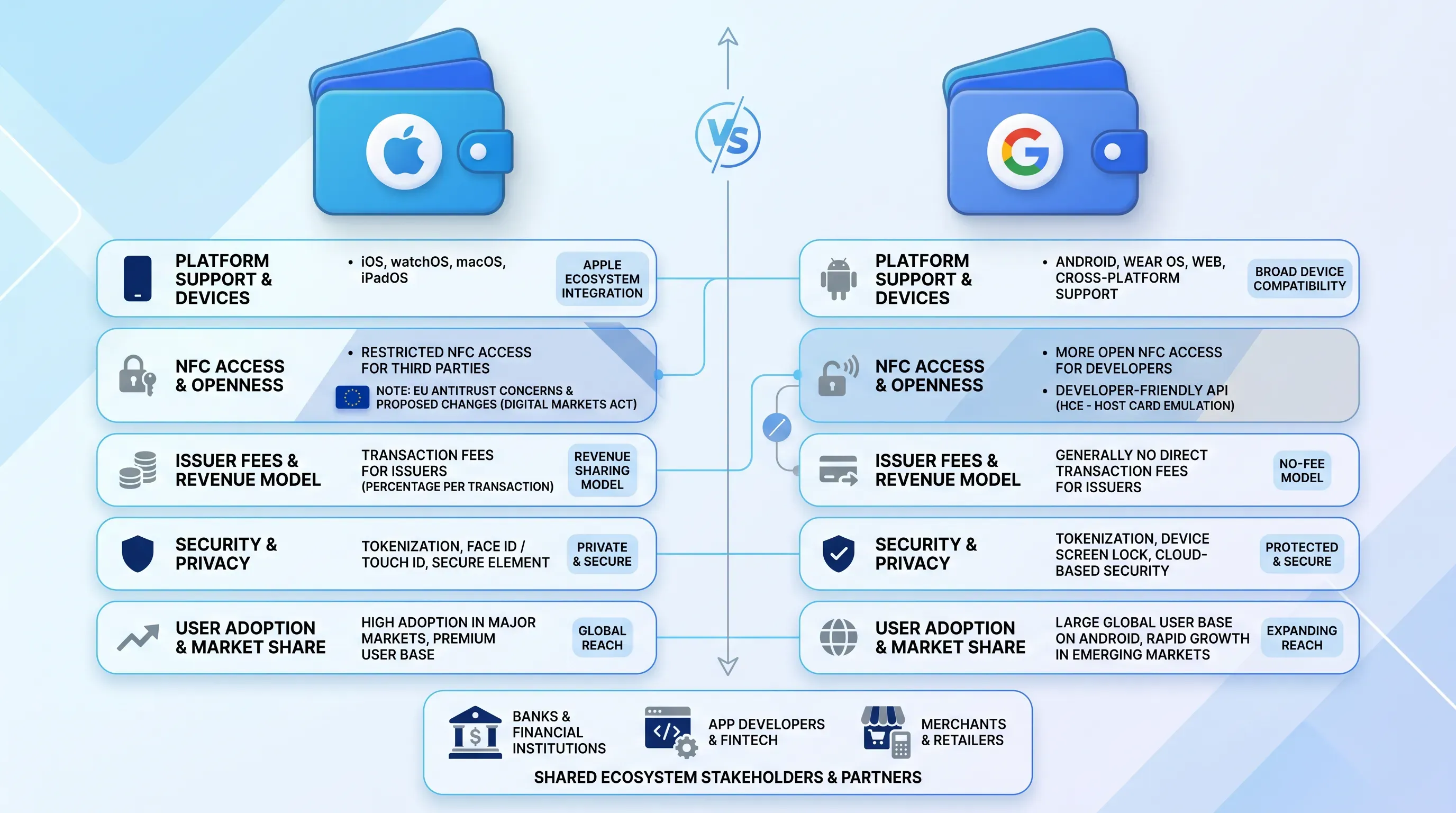
Apple Pay and Google Pay reach the same outcome through different plumbing, and issuers need to understand both. Apple runs a single wallet on iOS, so issuers integrate with Apple's PassKit framework and route tokens through the network's token service. Chargeflow says Apple Pay is available in over 90 countries and supported by roughly 11,000 banks. Apple also began opening the iPhone's near-field communication APIs to outside developers in 2024 for the EU and several other markets, as Statista reports, which changes the competitive picture for issuers in those regions.
Google Pay handles things with a bit more variety on the Android side. An issuer's app pushes a card into Google Wallet using the Push Provisioning API, and Google also supports "bounce provisioning," where a user who starts in Google Wallet gets redirected into their issuer's app to finish, as the Google Pay flows documentation describes. Google supports optical character recognition scanning and manual entry across many countries, and in the Netherlands it even allows adding cards over NFC.
There are a few practical differences worth keeping in front of you when planning a launch:
-
Onboarding: Google requires issuers to sign a Non-Disclosure Agreement and Click-Through Agreement and join an allowlist before the Push Provisioning API opens up, per the Google get-started guide. Apple runs its own authorization process for issuer apps through its network onboarding.
-
Token lifecycle: Google deletes a device token after 90 days of inactivity or after device-lock removal; a factory reset or cleared app data triggers the same deletion.
-
Integration timeline: Google's agreement requires issuers to complete token service provider integration within six months of launching Google Pay.
Both platforms lean on the same network token services, so the security model underneath is consistent. The differences live in the developer experience and the regional support each one offers.
Benefits for issuers and users
For issuers, digital card issuance changes the economics and the relationship. A card that activates in seconds means a cardholder starts spending sooner, which lifts early engagement and revenue. Skipping the plastic for a digital-first card cuts manufacturing and postage costs outright. And because the card lives inside the issuer's app during push provisioning, the issuer keeps a direct channel to the customer at that moment.
For users, the appeal is immediate access and a stronger sense of safety. Someone approved for a card can pay before lunch instead of waiting a week for the mail. The token model means a stolen phone doesn't hand over a working card number, and biometric checks like Face ID add another lock. Apple Pay alone reached an estimated 744 million users globally in 2024, up from 507 million in 2020, which shows how comfortable people have grown with paying by phone.
These gains feed the broader move toward instant payments. ACI Worldwide's trend report shows that mobile wallet payments rose 105% from 2019 to 2024, and adoption is now strong across every generation. When digital card issuance puts a card into a wallet for tap-to-pay in one sitting, the wait that defined card delivery for decades disappears.
Common challenges to watch
Provisioning isn't friction-free, and the first hurdle is verification. If the identity check fails or stalls, the card never makes it into the wallet and the cardholder gives up. Issuers reduce this by tuning their risk paths carefully, so genuine customers sail through a green path while only riskier sessions get pushed to a yellow-path second factor.
Fraud during enrollment is the sharper threat. The US Payments Forum names mobile wallet provisioning fraud as a primary form of account takeover, where a fraudster tries to load a stolen card onto their own device. The defense is a layered one: strong authentication at enrollment and real-time scoring of each provisioning attempt, with token revocation the instant a card is canceled. A relaxed checkpoint at provisioning is exactly where attackers look for a way in.
The last hurdle is inconsistency across devices and regions. A wallet feature that works on one platform behaves differently or is missing entirely in another market, and supported card networks vary by country. Issuers smooth this out by testing across both major wallets before launch and by setting clear expectations about where mobile wallet integration is available. Getting these pieces right is what separates a clean rollout from a stream of support tickets.
Where digital payments go next
The direction is steady and clear. Physical cards keep losing ground as wallets become the default, and the data backs it up. Digital tap-to-pay volume is projected to grow over 150% by 2028, with wallets on track to become the default alternative payment method at US point of sale by 2027, per Chargeflow. New use cases keep arriving too, from transit and digital ID to buy-now-pay-later options layered on top of the wallet.
For issuers, the question is how well their provisioning experience holds up. A smooth path into Apple Pay and Google Pay, backed by solid fraud controls, is becoming table stakes. If you issue cards, this is the moment to review how digital card issuance and mobile wallet integration perform across the platforms your customers actually use.
EGS builds resilient fintech infrastructure that supports digital card issuance and mobile wallet integration so issuers can move cards into wallets securely and at scale. To evaluate your own provisioning strategy or see how this fits your card program, reach out to our team for a consultation.