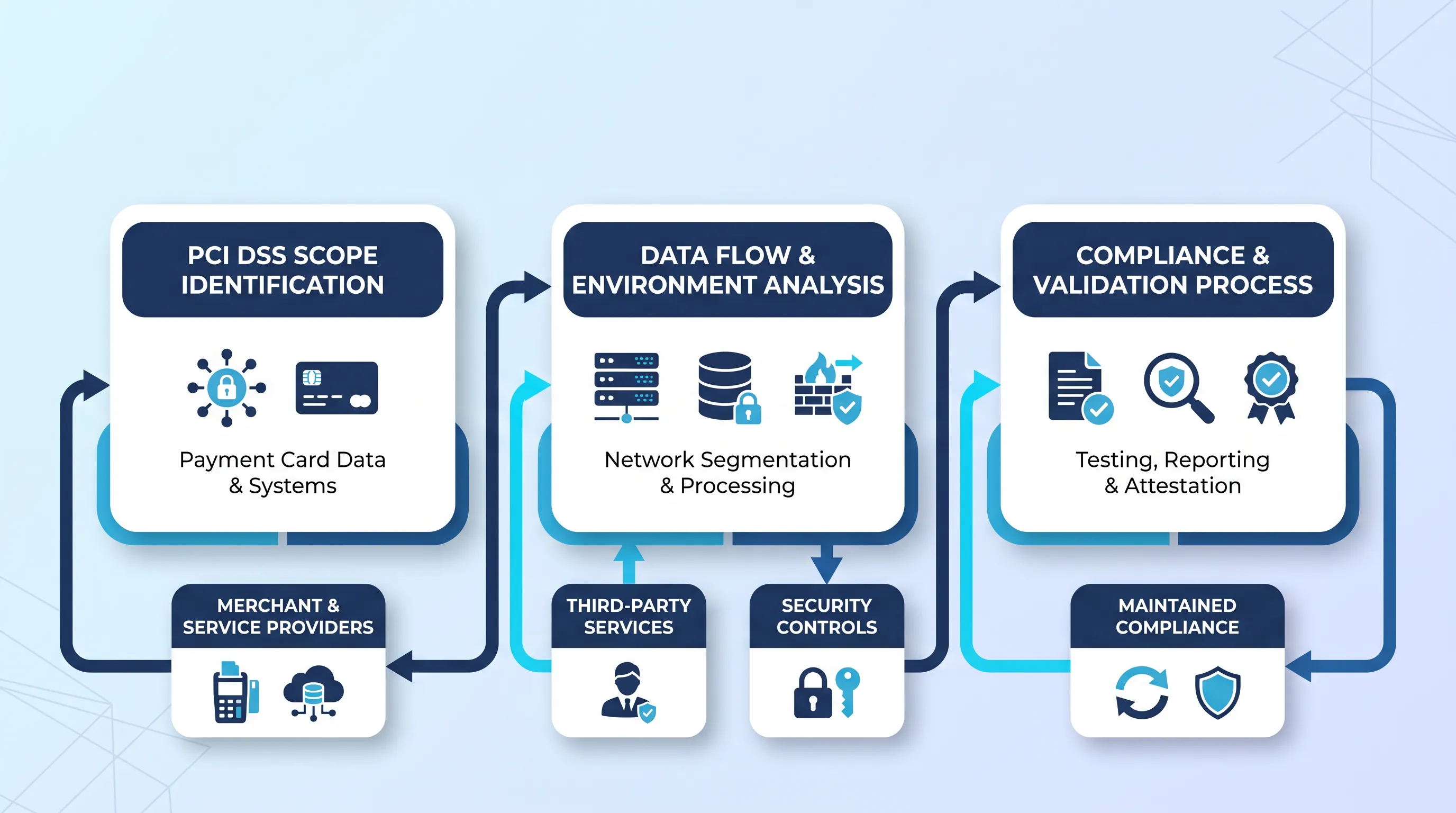
Inventory systems and services
List what exists, at the level of component and service, and stop there. The inventory is a scope artifact, so it needs completeness rather than depth.
-
POI devices by model and approval class, with ATM encrypting PIN pads listed separately from attended POS
-
Switching and transaction processing components and HSMs with firmware versions
-
Facilities housing cryptographic devices and the networks carrying PIN traffic
-
Third-party services covering key injection and terminal management
Anything you cannot name an owner for goes on the list anyway, flagged. An unowned component is a finding you found yourself, which is the cheapest kind.
Assign control owners
Map every component and process to a named internal team, then to the contract or schedule that defines the service provider's obligations. Add the evidence source for each control, because a control nobody can evidence is indistinguishable from a control that does not exist. Document the key management responsibilities at the same time.
The valuable column is the last one: unresolved shared-responsibility questions. Who verifies tamper inspection on terminals a PTSP maintains? Who holds the custodian records for keys injected at a facility you do not operate? Leave those open and visible rather than resolving them optimistically.
Test evidence against reality
Documents drift. The test is whether the document describes the system you run. Pull each item below and compare it against interviews with the people doing the work and direct observation of a key ceremony or a terminal deployment.
-
Network and data flow diagrams and key inventories with current custodian assignments
-
Device approval records and firmware versions checked against the PCI SSC listings
-
Written procedures for key generation and exchange along with loading and destruction, plus the responsibility records that name who performs each step
-
Access evidence for HSM consoles and key management tooling, plus change records covering the period under review
-
Third-party attestations, including PIN Attestations of Compliance, which the PCI SSC lists as valid for two years from the date the assessor signs
When a document and an engineer disagree, the engineer is right, and the document is your remediation item. That comparison is what makes a PCI PIN Security Requirements readiness exercise worth doing before a QPA arrives rather than during.
Close PCI PIN gaps
Most gaps that surface from this exercise are engineering gaps wearing compliance clothing. A key hierarchy that grew by accretion. A switch-to-HSM integration that authenticates weakly because it was built before anyone asked. Host commands enabled during a 2019 migration and never disabled.
EGS works on exactly this layer. Our engineers have written about how banks manage keys across HSM fleets at scale and about the key management lifecycle from generation through rotation. They have also written about designing the software layer between a payment application and the hardware security module, where a misconfigured environment can hold a valid certification and still expose keys at runtime.
That last point is where this work gets genuinely technical. Investigating an integration gap means reading code paths and host command sets.
Structure the engagement
Keep the engineering work and the assessment work in separate hands. A QPA validates and attests, and the PCI SSC is explicit that enforcement of compliance programs sits with the payment brands, networks or acquirers rather than with the assessor. EGS does not perform that validation, and that separation protects you.
-
Architecture review against the completed worksheet, with the PIN trace confirmed by observation rather than by diagram
-
Responsibility mapping across internal teams and service providers, with every open shared-responsibility question written down
-
Remediation planning sequenced by dependency, because key hierarchy changes gate most of the other work
-
Implementation and testing, coordinated with your QPA so evidence is produced in a form the assessment can use
Run the sequence before the assessment window. Remediation under assessment pressure costs more and produces thinner evidence against the PCI PIN Security Requirements.
Plan the next step
Scope slips because production changes faster than documentation, and because the boundary between your controls and your providers' controls was never drawn precisely in the first place. Map the trace and name the owners so you can test every document against what the systems actually do.
Closing what that exercise finds is engineering work, and it is where PCI PIN programs succeed or stall. Discuss your PIN-processing environment with EGS and identify the engineering work needed to support your compliance program. Book a call with the engineering team to plan the next step.